
Why Gaming Influencers Matter More Than Ever
Gaming marketing does not work the same way as traditional entertainment marketing. Players do not respond well to interruption, exaggerated claims, or one off promotions. They respond to people they already trust.
That is where gaming influencers hold real power. Not because of follower counts, but because of time spent, shared experiences, and credibility built through thousands of hours of visible gameplay.
When a gaming personality talks about a title, viewers already know how that creator plays, what they enjoy, and what they criticise. This context changes everything. Promotion stops feeling like advertising and starts feeling like informed opinion.
For brands, publishers, and studios, this is the difference between being seen and being taken seriously. Influencer marketing in gaming works best when it respects player intelligence, creator credibility, and community dynamics.
This article breaks down how gaming personalities influence behaviour, why trust compounds over time, and how brands can turn creator partnerships into measurable growth.
Understanding the Gaming Influencer Ecosystem
One of the biggest mistakes brands make is treating gaming influencers as a single category. In reality, the ecosystem is layered, and each layer influences players in a different way.
Live Streamers
Live streamers influence decisions in real time. Their audiences watch extended sessions, ask questions, and react instantly to what happens on screen. This format is especially effective for multiplayer games, live service titles, early access launches, and major updates. Viewers are not just watching a game. They are evaluating whether it looks fun, stable, and worth their time.
From a campaign standpoint, live streams are ideal for showcasing depth. Long sessions reveal progression systems, matchmaking quality, balance issues, and overall pacing. These are details players care about before committing.
Short Form Creators
Short form creators dominate discovery. Their clips surface in feeds where players are not actively searching for new games. A strong hook or memorable moment can introduce a title to thousands of potential players within hours. This content works best when it highlights moments of emotion, tension, humor, or achievement.
Short form content is rarely the final conversion step, but it plays a crucial role in awareness and curiosity.
Long Form Video Creators
These creators influence considered decisions. Reviews, breakdowns, and comparison videos are often watched right before purchase or download. Their audiences expect honesty and detail. Skipping flaws or exaggerating strengths can damage credibility instantly.
Brands that respect this format benefit from more qualified traffic. Viewers arrive informed rather than persuaded.
Community Focused Creators
Some creators build influence through conversation rather than content volume. Discord servers, Reddit threads, and private groups allow for ongoing discussion. These creators often shape long term perception and retention. Their impact may not appear immediately in analytics, but it compounds over time.
Why Traditional Ads Struggle in Gaming
Gamers are highly resistant to interruption based advertising. Many use ad blockers, skip pre roll ads, and ignore sponsored banners. This is not because they dislike brands. It is because they value authenticity and relevance.
Influencer content works because it blends naturally into entertainment. The audience chooses to watch. The promotion happens within gameplay, commentary, or storytelling rather than interrupting it.
A gaming personality does not just show a product. They show how it fits into real play sessions, real setups, and real reactions. This context makes the message believable.
What Makes Influencer Promotion Effective in Gaming
Successful gaming influencer campaigns follow principles that differ from traditional brand collaborations.
Consistency beats one off promotion
A single sponsored mention rarely shifts player behavior. Repeated exposure across streams, videos, and social posts builds familiarity. Familiarity reduces skepticism. Over time, the audience begins to associate the game or brand with the creator’s normal content rather than a paid placement.
Creative freedom protects authenticity
Gaming audiences are extremely sensitive to forced messaging. When creators are restricted to rigid scripts, viewers disengage quickly. Campaigns perform better when influencers explain features, mechanics, or products in their own words and through their own playstyle.
Context matters more than claims
Showing is more powerful than telling. Demonstrating how a game feels during real sessions answers more questions than any list of features. Viewers notice loading times, bugs, difficulty spikes, and progression speed on their own.
Participation creates momentum
The strongest campaigns invite the audience to take part. Viewer matches, challenges, community events, custom servers, and shared goals turn passive viewers into active participants. This interaction increases watch time, engagement, and click through rates.
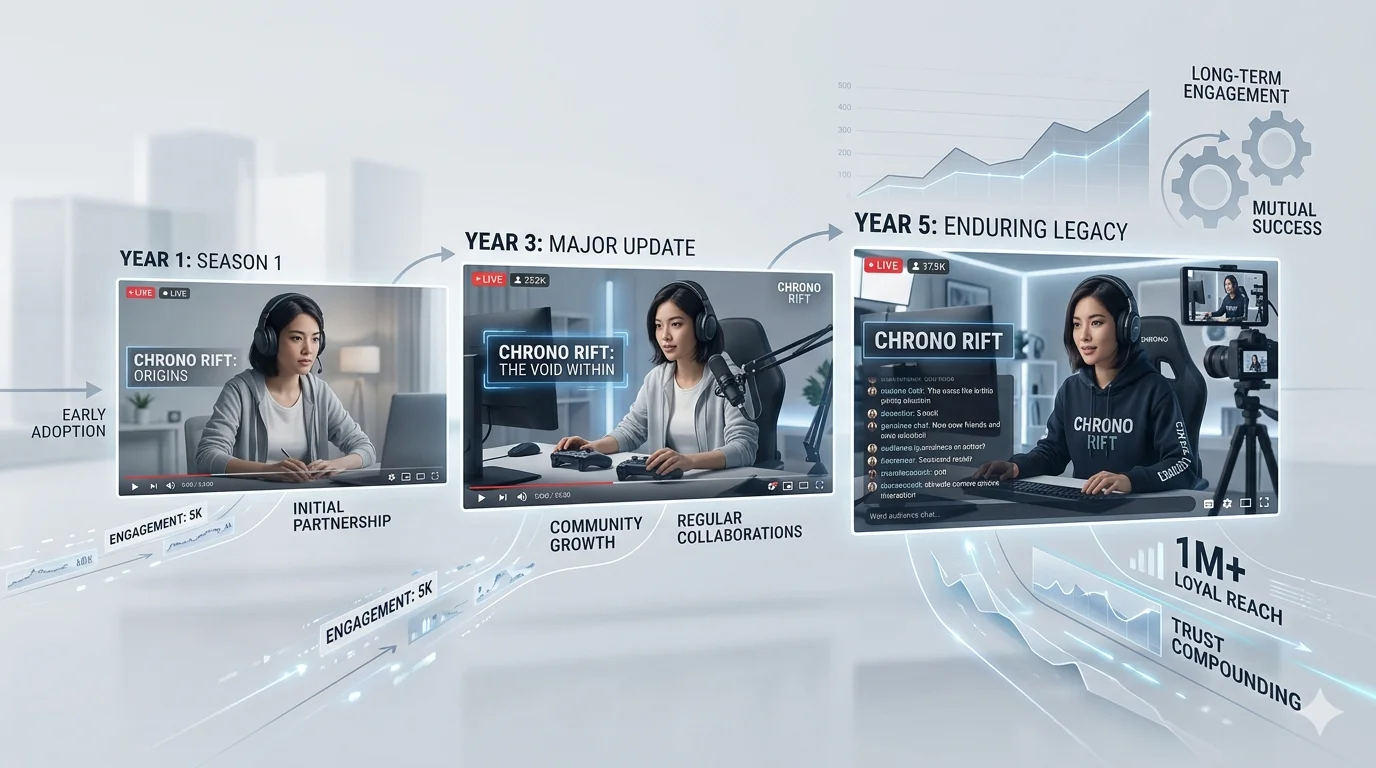
How Influencer Trust Compounds Over Time in Live Service Games
Live service games rely on long term engagement rather than one time purchases. This makes influencer trust especially valuable because it compounds over time.
When a creator plays a live service game consistently across seasons, updates, and balance changes, the audience begins to associate that game with the creator’s ongoing experience. Viewers do not just see highlights. They see frustrations, improvements, fixes, and evolution. This transparency strengthens credibility.
Each stream or video reinforces familiarity. Familiarity lowers resistance. Over time, even viewers who were initially hesitant begin to reconsider because the game feels known rather than unknown.
This is why long term creator partnerships outperform launch only promotions for live service titles. A creator who returns after updates signals confidence. A creator who stays during rough patches signals authenticity.
From an agency perspective, this compounding effect is one of the strongest drivers of sustained installs, returning players, and renewed interest during seasonal content drops.
How Gaming Influencers Influence Buying Decisions
Gaming purchases are rarely impulsive. Players invest time, money, and identity into what they play. Influencers shorten the decision process by answering questions players already have.
• Is the game worth the time investment
• Is it fun solo or only with friends
• Is progression fair or pay to win
• Does it run well on average hardware
• Is the community active
When a trusted creator addresses these points through real gameplay, viewers move closer to action without feeling sold to.
Regional Audiences and Platform Differences
Influencer impact varies significantly by region, and ignoring this often leads to missed opportunities.
In North America and the UK, Twitch and YouTube remain dominant for long form and live content. Audiences here respond well to detailed gameplay, commentary, and competitive formats.
Across parts of Europe, including Germany and France, YouTube and TikTok play a stronger role in discovery. Edited gameplay, breakdowns, and short clips often outperform long live sessions for awareness.
In Asian markets, mobile focused platforms and short form video carry more weight. Creator content here often blends entertainment with rapid progression showcases and rewards based messaging.
Understanding these differences allows campaigns to be shaped around how players already consume content, rather than forcing a single global approach.
For a game marketing agency, regional platform strategy is not optional. It directly affects impressions, engagement quality, and click through performance.
Strategic Ways Brands Can Work With Gaming Personalities
Early Access and Insider Experiences
Giving influencers early access allows them to create content before the wider market. This positions them as insiders and builds anticipation among viewers.
Co Created Content
Instead of asking for promotion, involve influencers in content creation. This could be designing an in game item, hosting an event, or shaping a challenge. Audiences respond strongly when creators feel genuinely involved.
Long Term Partnerships
Ongoing partnerships feel more credible than short term deals. Repeated appearances across updates and seasons reinforce trust.
Community Driven Campaigns
Campaigns that reward viewers for participation rather than just watching often perform best. Examples include ranked challenges, referral rewards, or shared progression goals.
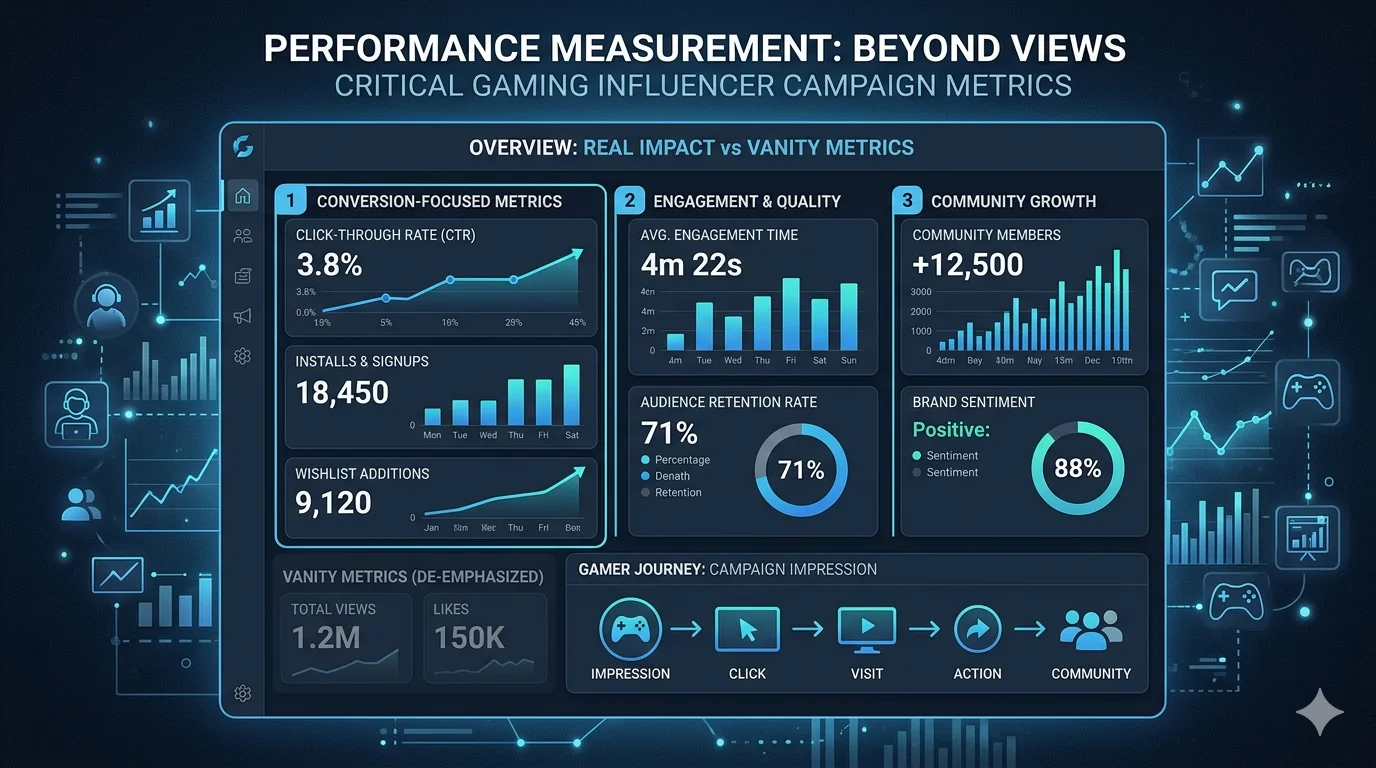
Measuring Success Beyond Views
Many campaigns fail not because the execution was poor, but because success was measured incorrectly. Views alone do not reflect influence.
Effective gaming influencer campaigns track behavior, not vanity metrics.
• Click through rates from creator links and panels
• Wishlist additions, sign ups, or installs
• Time spent on landing pages during campaigns
• Community growth across social and Discord platforms
• Repeat mentions and organic discussion by viewers
From an agency perspective, these signals indicate whether the campaign is creating real interest or simply passing attention.
Longer term tracking is equally important. Influencer campaigns often have delayed impact. Players may watch content today and act days or weeks later. Attribution models should reflect this reality.
Common Mistakes Brands Make
• Choosing creators based only on follower count
• Treating influencer content like traditional ads
• Ignoring community feedback during campaigns
• Ending partnerships too quickly
• Failing to support creators with useful assets
Avoiding these mistakes can significantly improve results without increasing budget.
Why Influencer Promotion Drives Clicks When Done Right
People click when they feel informed, curious, and confident. Gaming influencers provide context that ads cannot. They answer doubts before viewers even ask them. This reduces hesitation and increases action.
When content feels helpful rather than promotional, clicks follow naturally.
Final Thoughts
Influencer marketing in gaming is not a shortcut. It is a strategic channel that rewards understanding, patience, and alignment. Gaming personalities are not just distribution points. They are trust holders within highly engaged communities.
For brands and publishers, the opportunity lies in respecting how gamers think and behave. When campaigns are built around relevance, creative freedom, and real participation, influencer promotion becomes one of the most effective ways to turn attention into action.
As a Game Marketing Agency, this is where expertise matters most. Not in chasing reach, but in building partnerships that feel natural to players and valuable to creators. When done correctly, influencer marketing does more than promote a game. It strengthens communities, shapes perception, and supports long term growth.